


strength isn't speed

Updated: Feb 9
What strength and athleticism mean to me now.
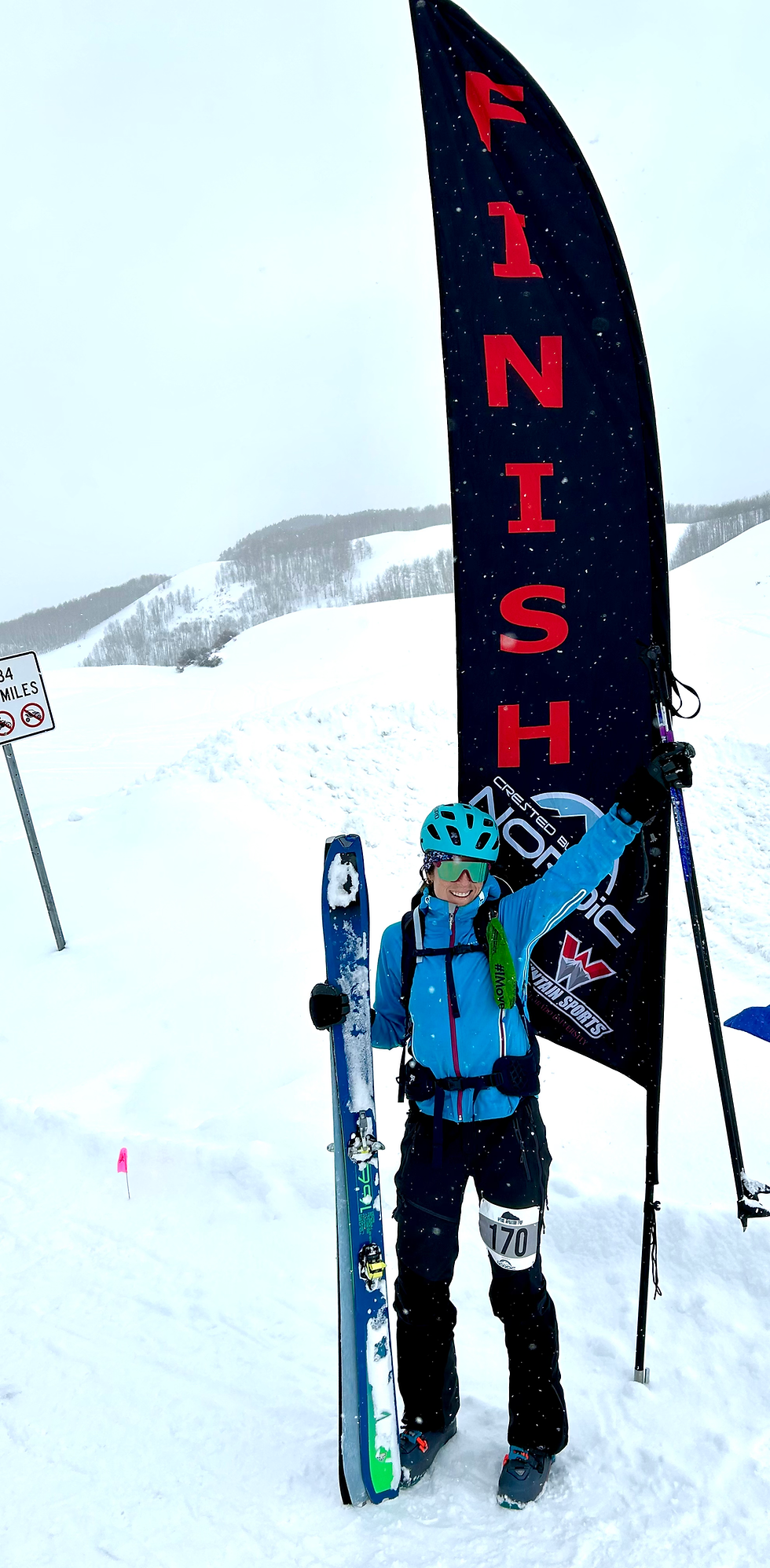
I used to be athletic in the most straightforward, uncomplicated way. I could get up off the couch and compete. I could move relatively fast. I could outdo people. I could rely on my body to do what I asked of it.
That ability gave me confidence—not just in my physical strength, but in my brain, my instincts, and my ability to learn quickly and adapt. I was the kind of person who could pick something up—a new sport, a new workout, a new challenge—and be relatively good at it without too much struggle. Not perfect and certainly not elite. But capable. Solid. Reliable. That ease mattered more than I realized at the time. It shaped how I moved through the world and it shaped how I saw myself.
Athleticism was a quiet assurance humming under everything else: I can do this. My body will show up.
Then I got Parkinson’s disease.
At first, the changes were subtle enough that they didn’t really bother me. Shaky hands. Slower reaction time. Less balance. A little stiffness. Fatigue that felt out of proportion to effort. But Parkinson’s has a way of removing your ability to negotiate with reality. Eventually, the changes become undeniable. The lag between intention and movement grows. Coordination becomes unreliable. Speed—once a given—becomes elusive.
You don’t just feel slower. You are slower.
And then, a few years after my diagnosis, I moved to a small mountain town.
This is a place where speed, strength, adventure, perseverance, and athleticism are not just hobbies—they are the currency of daily life. It is a place where people casually stack altitude gain, miles, races, powder days, and seasons like receipts, where being capable outdoors is not an exception, but the baseline. Movement is social capital.
Before I moved here, I don’t think I fully grasped the fault line I was walking into.
Because when your body is changing, and you land in a place where physical capability is deeply visible and constantly measured, it forces a reckoning. Not just with what you can do—but with what you believe athleticism is.
For a long time, being athletic meant being fast to me. It meant efficiency and responsiveness. It meant not having to think about your body because it simply did what you wanted it to do—especially if you actually trained (dedication I never really had). Athleticism also meant being competitive, even if only with yourself. In a word, it meant confidence.
Parkinson’s dismantles that definition piece by piece.
It teaches you that strength and speed are not synonymous. That endurance is not about how fast you move, but whether you keep moving at all. It teaches you that athleticism, stripped of performance metrics, becomes something much harder to quantify and explain.
I am slower now. Objectively, unavoidably. I lose balance more easily. My body sometimes hesitates where it never used to. I work harder for less output.
Some days, the gap between effort and result is infuriatingly wide.
There is grief in that.
Grief for the version of myself who could rely on her abilities.
Grief for the confidence that came from physical competence.
Grief for the identity that didn’t require explanations or caveats.
But there is also clarity.
Because living in a mountain town with Parkinson’s has forced me to confront a deeper question: What does it actually mean to be strong?
Is it strength to move fast—or to move deliberately when fast is no longer available? Is it strength to compete—or to keep showing up when competition guarantees disappointment?
Is it strength to “conquer” terrain—or to negotiate with your body, again and again, without quitting on it, taking time to notice and value that terrain?
I think about this every time I ski, hike, run, or attempt something that used to feel automatic. I think about it when I am passed effortlessly by people who are warming up while I am already out of breath. I think about it when my body doesn’t cooperate, when balance falters, and when fatigue arrives early and uninvited.
But still, I go. And it’s not stubbornness. It’s not denial. It’s not even optimism.
It’s a redefinition.
At one point, trying to make sense of all of this, I did what people do now. I asked the internet to define athleticism.
It told me this:
“Athleticism is the capacity to move through the world with coordination, strength, balance, and adaptability, shaped not just by physical ability but by confidence, awareness, and the willingness to engage fully with movement—especially when it’s hard.”
I read it a few times. Not because it was poetic, but because it was unexpectedly accurate.
Parkinson’s takes aim at the most visible parts of that definition first. Coordination becomes unreliable. Balance can’t be assumed. Strength fluctuates. Speed disappears. The parts of athleticism that once required no thought now demand constant attention.
What remains is adaptability.
Now, I have to adapt how I ski, how I hike, how I jog, how I adventure, and even how I rest. I adapt expectations daily—sometimes hourly. I adapt emotionally, too: to frustration, embarrassment, fear, and grief. That adaptation is not passive. It is work.
As for awareness, it deepens whether you want it to or not. I am more aware of my body now than I ever was when it worked effortlessly. I notice small shifts. That awareness doesn’t make movement easier, but it makes it possible-- kind of.
And then there is willingness. The willingness to engage fully with movement, even when it highlights loss instead of progress. The willingness to keep showing up in a culture that celebrates peak performance, knowing I no longer meet the dominant standard. It is the willingness to try anyway.
In a mountain culture that celebrates visible achievement, Parkinson’s indeed forces you outside the dominant narrative. There are no podiums for consistency. No medals for persistence. No applause for managing fear and poor outcomes while doing something you love anyway.
And yet, that quiet perseverance is its own form of athleticism.
Because when speed is taken away, you are left with intention. When competition fades, you are left with commitment. Parkinson’s has changed my body. It has changed how I move. It has changed how I show up—and how I am seen—in a place that prizes movement. But I’d like to think it has not taken away my strength.
It has simply forced me to redefine it.
And living up to that definition—adapting daily, cultivating awareness, choosing engagement without guarantees—might be the most athletic thing I’ve ever done.


You are one of the strongest people I have ever met. Keep showing up! You are seen and you are inspiring in ways you can only begin to imagine.